
Welcome to The RPO Column. The idea here is simple: We have three topics. We RUN with one, PASS on another, and OPTION the other. With the United States knocked out of the 2026 FIFA World Cup, I decided to quit yapping in my group chats, spare those poor suckers of my thoughts, and just write them out instead. Enjoy!
All that fuss over Folarin Balogun’s red card proved to be a gargantuan waste of time.
The United States men’s soccer team was undone by mental lapses and, ultimately, outclassed by one of Europe’s best in a 4-1 drumming against Belgium in the 2026 World Cup’s Round of 16. This marks the second straight World Cup the USMNT has been dumped out in the Round of 16 (and aside from failing to qualify for Russia 2018, the fourth straight time the team has bowed out at this stage).
To call the result deflating feels like an understatement.
A spectacular 4-1 opening win against Paraguay set the bar and the hype unreasonably high, while a win against Australia to comfortably clinch reaching the Round of 32 maintained optimism. In retrospect, though, the difficulty of the Australia result and the infamous 2-0 win over Bosnia-Herzegovina should have been clear warning signs.
The USMNT is in the exact same spot that it was last cycle — capable of emerging as the best from among the world’s scrappiest, yet still unworthy of sharing the pitch with the world’s classiest.
As the U.S. Soccer Federation once again licks its wounds and faces many of the same tough questions hanging over it from four years ago, below, we address some of those issues.
The window for USMNT’s current generation is shut: RUN
The USMNT’s 26-man World Cup roster ranked among the youngest at the World Cup, tied for 12th with Bosnia-Herzegovina. (26.38 years old, per Redditor Safe-Pea-1832.) And that’s with 38-year-old defender Tim Ream dragging that number in the more experienced direction.
Coach Mauricio Pochettino’s regular starting XI at the 2026 World Cup looked like this:
Goalkeeper: Matt Freese, 27 years old (NYCFC, MLS)
Defenders (right to left): Alex Freeman, 21 (Villarreal, La Liga); Chris Richards, 26 (Crystal Palace, English Premier League); Ream, 38 (Charlotte FC, MLS); Antonee “Jedi” Robinson, 28 (Fulham, EPL)
Midfielders: Tyler Adams, 27 (Bournemouth, EPL); Weston McKennie, 27 (Juventus, Serie A); Malik Tillman, 24 (Bayer Leverkusen 04, Bundesliga)
Forwards: Sergiño Dest, 25 (PSV Eindhoven, Eredivisie); Christian Pulisic, 27 (AC Milan, Serie A); Folarin Balogun, 25 (AS Monaco, Ligue 1)
This XI has an average age of 26.8, which means this is a lineup presently in its prime. Four years from now, U.S. stalwarts in Robinson, Adams, McKennie, and Pulisic will be on the other side of 30. Outside of the preferred XI, midfielders Gio Reyna (23 — Borussia Mönchengladbach, Bundesliga) and Sebastian Berhalter (25 — Vancouver Whitecaps, MLS) were Poch’s favorite subs during the tournament. For whatever reason, fullback Joe Scally (23, Borussia Mönchengladbach, Bundesliga), wingback/forward Tim Weah (26 — Marseille, Ligue 1), and midfielder Brenden Aaronson (25, Leeds, EPL) couldn’t break into Poch’s rotation. Most of these players, if they feature, will be on the backend of their primes by the time the Spain-Morocco-Portugal World Cup starts.
On Monday, Belgium left star winger Jeremy Doku and legends Romelu Lukaku and Kevin De Bruyne on the bench, and still dominated in every facet. Whether you’re a Eurosnob or an MLS apologist, Monday simply wasn’t a good day for either faction of U.S. Soccer fandom. Pulisic and McKennie are Serie A starters (we can discuss the current quality of the league on another day); Adams, Richards, and Robinson are Premier League starters. Robinson is the only player of that group who played well; the rest underwhelmed on the biggest stage where they were expected to lead the way. Ream and Freese each had “what are you doing!” moments that led to goals. Freeman, an MLS alum, and Berhalter had decent outings, though.
Regardless of league, there simply aren’t many u25 USMNT players currently inspiring much confidence for the next cycle, not at the levels that this group reached. Of course, things can change in an instant and a new star could emerge years from now — just look at Freeman, who only made his national team debut last summer and ended up a crucial contributor at the World Cup. As is the case with Balogun, there could also be a dual-national out there who can’t break into a top national team and sees a pathway with the USMNT. The latter method isn’t unethical. However, its mercenary nature is an inexcusable demerit against the level of development that the U.S. federation has long been incapable of.
Below are a handful of names that might be worth keeping an eye on/have been mentioned at reputable places and/or Reddit:
Noahkai Banks, 19 (FC Augsburg, Bundesliga): a 6’4” center back. Not much more to say here, other than, Thank you, Footy Gods!
Cavan Sullivan, 16 (Philadelphia Union, MLS): This is probably the most rational Reddit analysis I’ve ever read when it comes to tempering expectations for a teenage attacker being touted as The Next Big Thing. Anyway, Poch turning to Reyna, who’s not very mobile but remains a gifted dribbler, is a sign that the USMNT is lacking in dribblers. Let’s hope Sullivan lives up to his potential.
Diego Luna, 22 (Real Salt Lake, MLS): I felt extremely bad for this guy getting left out of the World Cup squad — Telemundo ads featured him prominently a month ago, and I once snagged a pic of a World Cup-themed rideshare car with his face plastered on it. That said, maybe he’s around in 2030, in his prime, to contribute in the attack. The U.S. likely could’ve used him in some capacity vs. Belgium.
Caleb Wiley, 21 (Chelsea, EPL): Being a youth player associated with Chelsea used to mean something. But since arriving from MLS’ Atlanta United, Wiley has bounced around both Strasbourg (six appearances) and Watford (15 apps.). He could be a potential Jedi understudy in a few years.
Damion Downs, 22 (Southampton, EFL Championship): In case Balogun falls off, perhaps this guy steps in. Although, these comments about his output and career moves are a little concerning.
Cole Campbell, 20 (Borussia Dortmund, Bundesliga): If you support a top European club, there’s a decent chance you’ve fielded a player developed by Dortmund. The academy produced Pulisic — perhaps Campbell could be the next star American winger to emerge from BVB.
The players are solely at fault for the performance: PASS
I think two things are true here: 1.) the USMNT players looked timid and got outplayed, 2.) Pochettino got out-managed.
There’s simply no defending this:


There’s also no defending this:
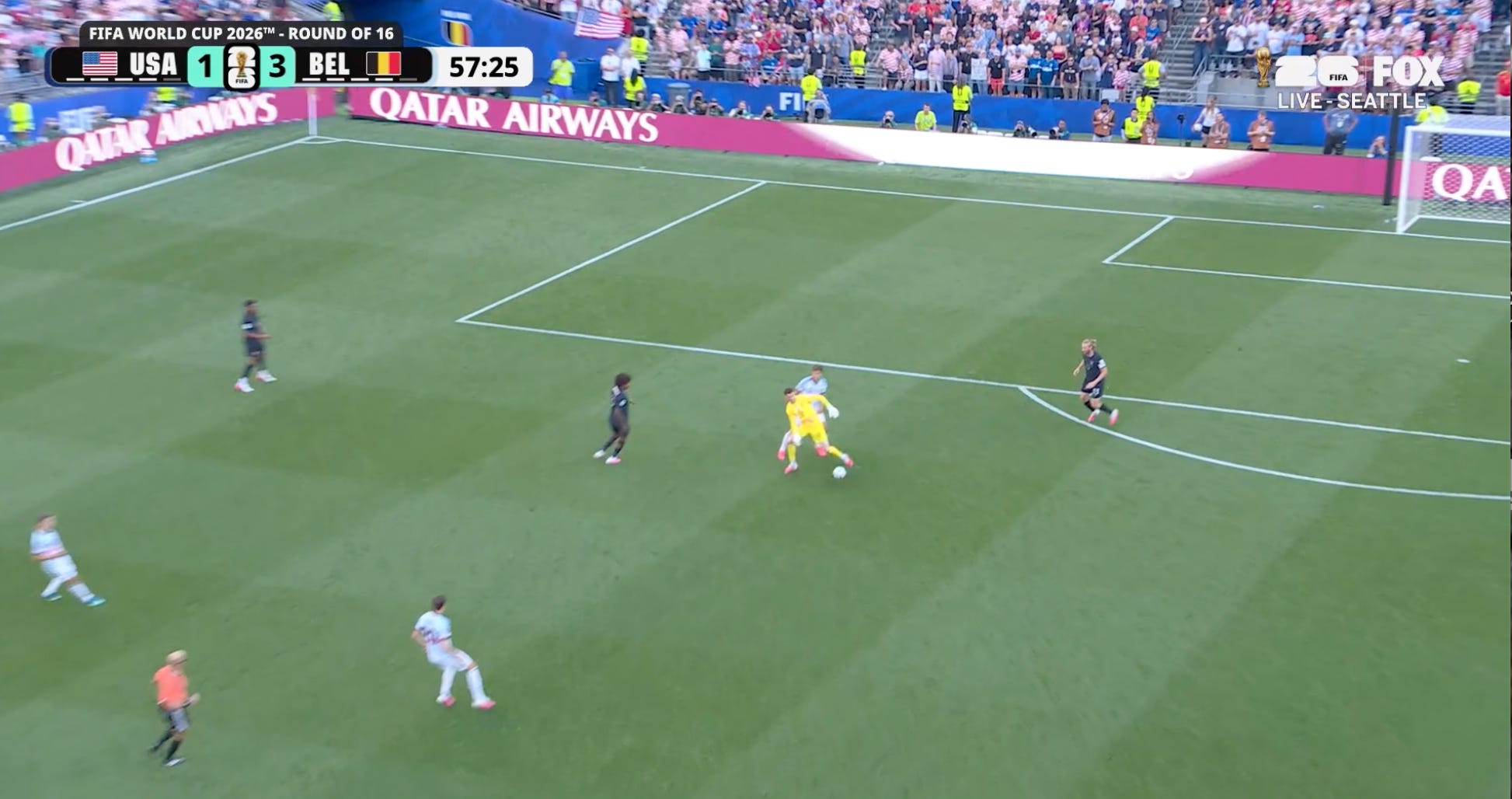
These are player mental lapses that can’t happen. It’s a deep lack of decisiveness and an unfortunate revelation that the moment was simply too big for some.
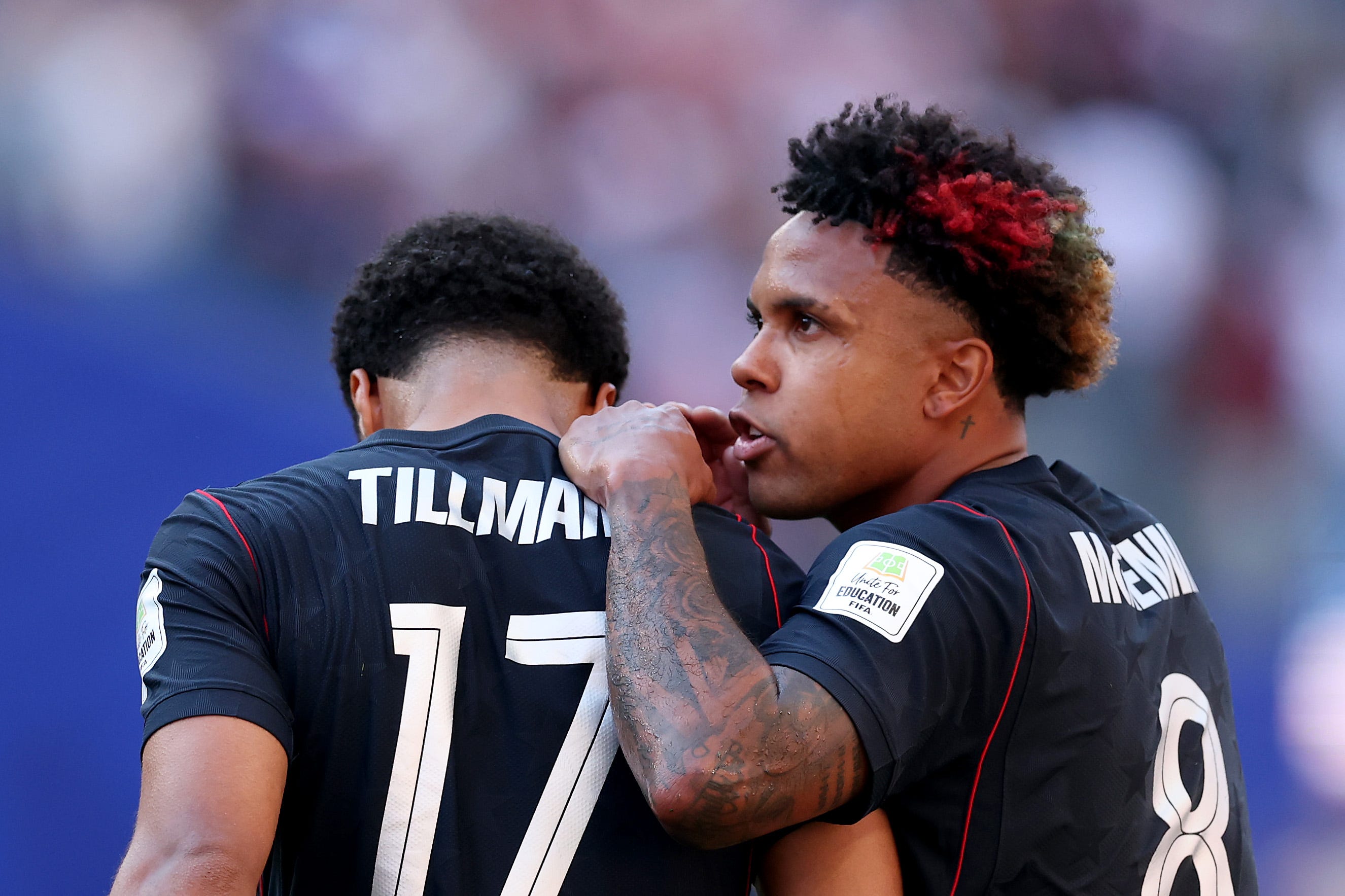
That said, let’s be very honest: While it’s encouraging that many members of the USMNT play in Europe’s top leagues, there is currently no superstar who would unquestionably feature in a starting XI for any of the top nations — even though, as we just established, this USMNT starting XI is in its prime. The Adams-McKennie-Tillman midfield trio performed well through previous games, but got completely overrun by Belgium’s Youri Tielemans, Nicolas Raskin, and Hans Vanaken. The Belgians telegraphed seemingly every pass. The USMNT players had very little confidence on the ball and were easily dispossessed any time they tried dribbling by the Belgians. Worst of all, the U.S. players rarely easily controlled the ball with their first touch, which, to me, is the best indicator of the lack of quality. The lights looked too bright for the USMNT and Belgium’s quick response to Tillman’s equalizer seemed to numb them.
Pochettino has coached this roster for nearly two years — he is surely aware of his players’ limitations. His $6.8 million salary reportedly makes him the third-highest paid World Cup coach. He is regarded as being one of the best tacticians in the world; Jedi Robinson is, perhaps, the only player on the USMNT roster who can say his standing among his positional peers is comparable to Poch’s standing among fellow coaches.
Poch’s system set the table for the USMNT’s thrashing of Paraguay. It’s up to a reader’s discretion how much credit Poch deserves for the U.S. scoring early against Paraguay and Australia and maintaining those advantages. Regardless, Poch is paid to be the difference maker on the touchline because the USMNT lacks one on the pitch. He failed to be that on Monday against Belgium.
The lapses in the USMNT backline felt eerily reminiscent of the routine mental lapses in Chelsea’s backline when Poch was in charge. The burden placed on isolated ballcarriers and a lack of dynamic attacking patterns — which allowed Belgium to sit back defensively and play passing lanes — felt eerily similar to what made Poch’s Chelsea attacks annoyingly anemic. I won’t speak for Tottenham fans, but I would bet their squads experienced similar issues under Poch. That said, for someone getting the full Poch Ball experience for the first time, it would appear blatantly obvious to call out the players for not doing their jobs. For those subjected to Poch coaching their clubs before, these are simply typical symptoms of his management.
Monday’s loss to Belgium drops the U.S. to 1-7 against European opponents since Poch took over. At some point a trend is more than that. Similar to the defensive lapses and stagnant movement of off-ball players in possession, it’s now a habit.
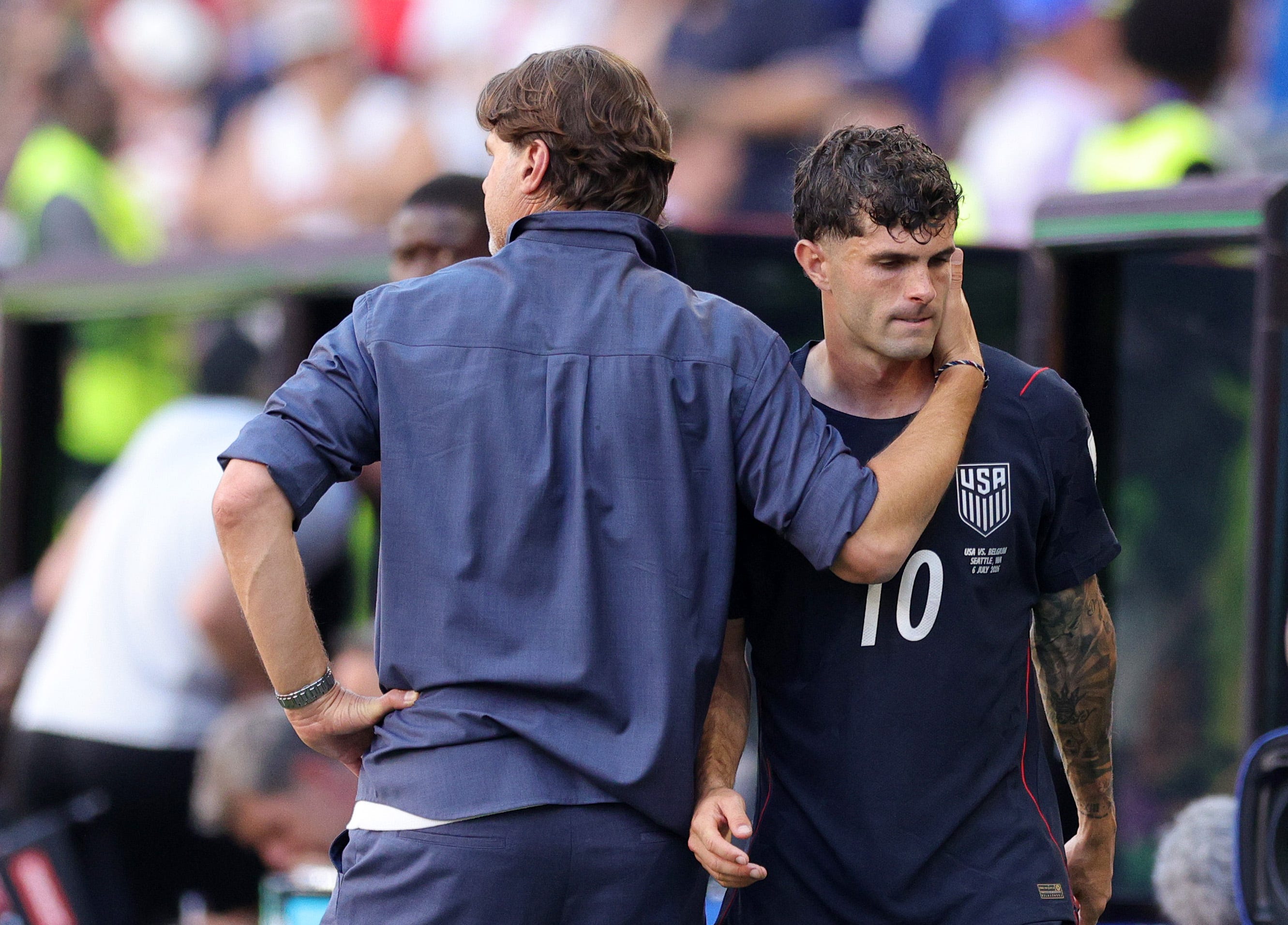
Poch is now 17-11-2 since taking over the USMNT. Until this World Cup run, I felt mostly indifferent to him leading the team — I was familiar with his pedigree, aware how stale his tactics can get and his inability to make strong in-game adjustments. His decision to leave out midfield reinforcements was a talking point when he announced the World Cup roster; it might have left him helpless Monday. And while benching Dest for his mental lapses makes sense, pulling him for Reyna — who, despite limited athleticism, did aid possession and helped gain a bit more control of the midfield — was puzzling, considering Dest could be trusted to at least hustle up and down the flank (up to your discretion how effectively). It felt like Pulisic would have been the player to pull, but Poch — the one paid the money to make such a courageous decision — didn’t do so. He did not adequately set up his players to succeed.
Christian Pulisic choked: OPTION
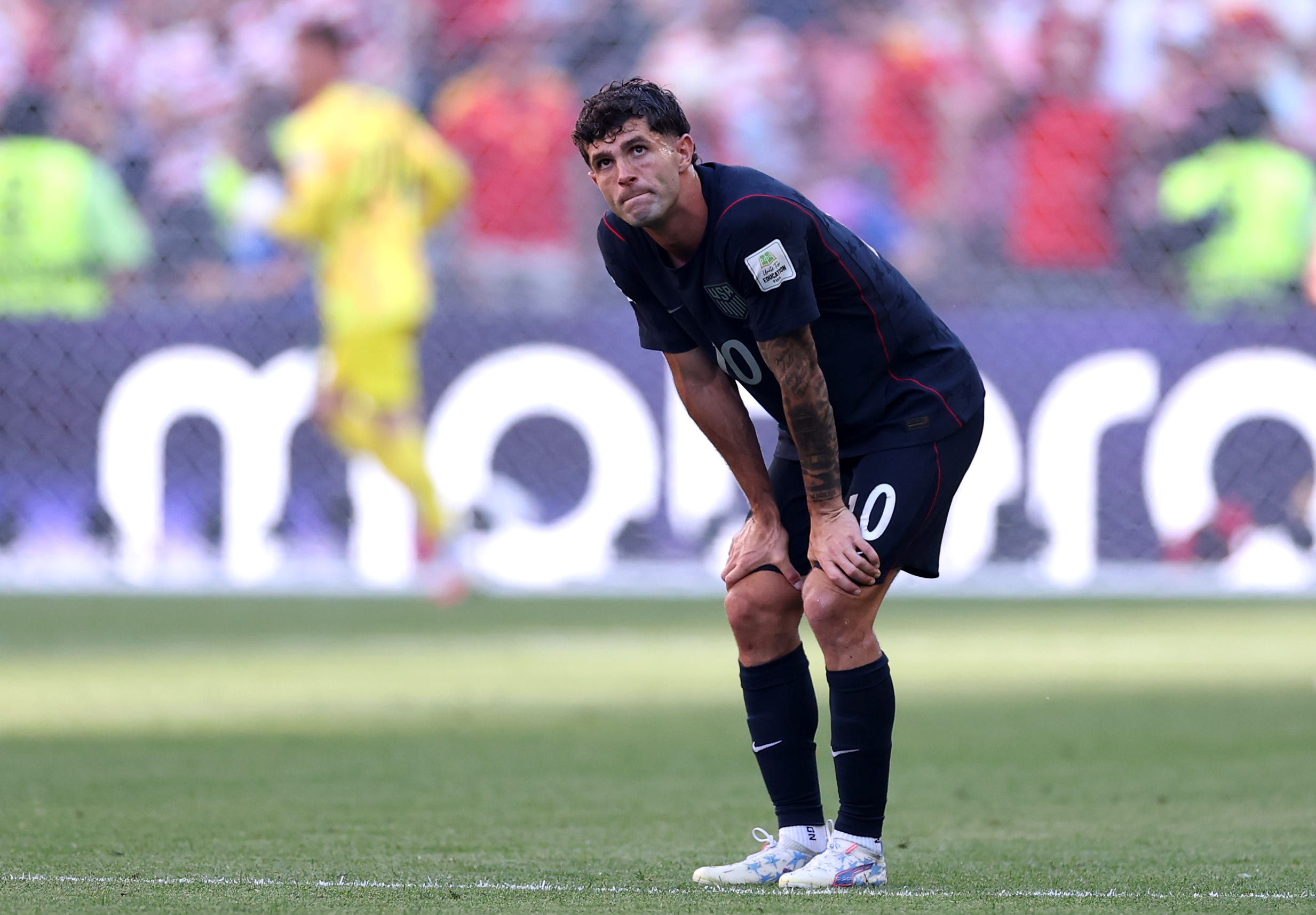
It’s tough for me to say that Pulisic “choked” when it looked obvious (!!!) from the outset that he’s not 100% and his skillset, respectfully, is entirely dependent on his athleticism. (He told reporters he twisted his ankle and knee “in one play.” This, after already being hampered by a calf injury during the tournament.)
However, Pulisic took the pitch Monday, and fair or not, he’s the face of USMNT and this generation of players. He bears the burden of the hype and expectations — and knows this well by now. He left himself open to scrutiny by playing (even if it’s unfair) in what was billed as the biggest match in USMNT World Cup history.
Pulisic didn’t play well. ESPN says he lost possession 11 times in just 45 minutes. Fotmob said he went 2/6 on dribbles and was dispossessed twice. He got hooked after 59 minutes.
This isn’t basketball, though. Singular players who can take over a game and flip it on its head by themselves are excruciatingly rare. Pulisic, occasionally capable of those gamebreaker moments in years past, is simply not that player anymore and hasn’t been for a few years. The injuries have mounted; who knows if the weight of the expectations have, too. It’s a disappointing end to Pulisic’s World Cup, but I think saying he specifically choked is hyperbolic.