The RPO: The World Cup Was Amazing! It Also Sucked. What Does It Mean for the Future?
Should the United States host the 2038 World Cup?


Welcome to The RPO Column. The idea here is simple: We have three topics. We RUN with one idea, PASS on another, and OPTION the other. After an amazing month, the 2026 World Cup is over, so let’s reflect — and look ahead.
Joan Monfort’s prophetic 2007 photoshoot of a baby Lamine Yamal being bathed by 20-year-old Lionel Messi portended a passing of the torch — Yamal’s Spain defeated Messi’s Argentina, 1-0, after extra time in Sunday’s World Cup final. While the embarrassing post-match reaction from the Argentines has deservedly (and unfortunately) stolen the spotlight from Spain’s impressive title run, Messi and Yamal closed the loop on their story with a touching embrace1 amid the chaos:
Let’s briefly address Argentina.
Sorry, we’ve seen this behavior before. Since Enzo Fernández went live on Instagram with his bus full of teammates singing a racist chant targeting France’s Black players in July 2024, I have not held this group in decent standing. They’ve always been obnoxious winners and lousy losers, but they showed their asses constantly throughout this World Cup. It’s an unfitting finale for Messi.
Enough foolishness. Let’s celebrate!
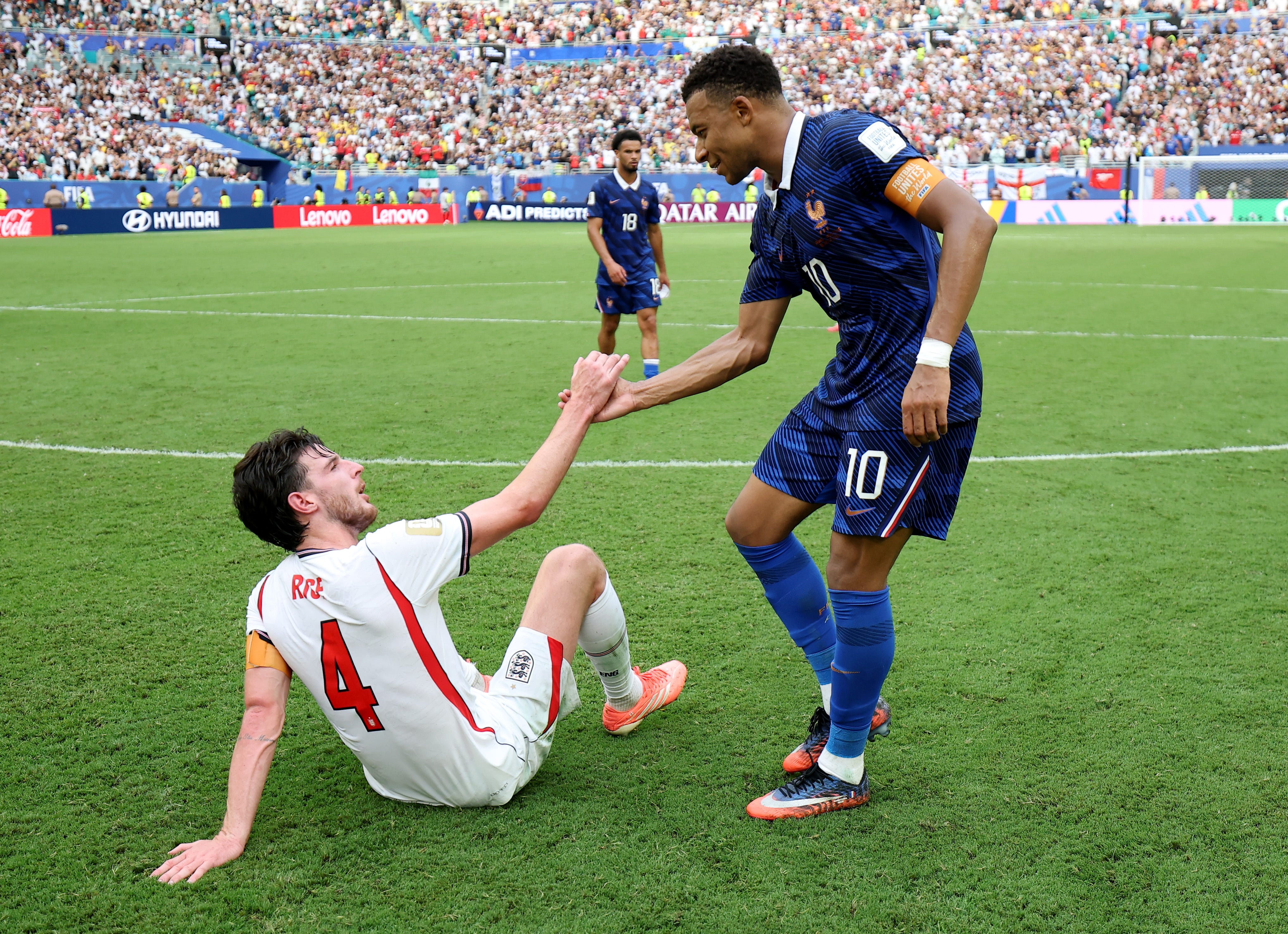
The 2026 World Cup was the most exciting World Cup since Brazil 2014: RUN
Seriously. It’s been a while since we’ve had a tournament maintain such a high level of excitement from start to finish. (I promise that this isn’t simply a case of getting to watch every match because it was played in North America.)
Overall, this edition absolutely surpassed both Russia 2018 (geopolitics impact and only a few memorable games) and Qatar 2022 (geopolitics impact, plus it was played in November and December!). This World Cup had everything one could have dreamed of from a footballing standpoint.
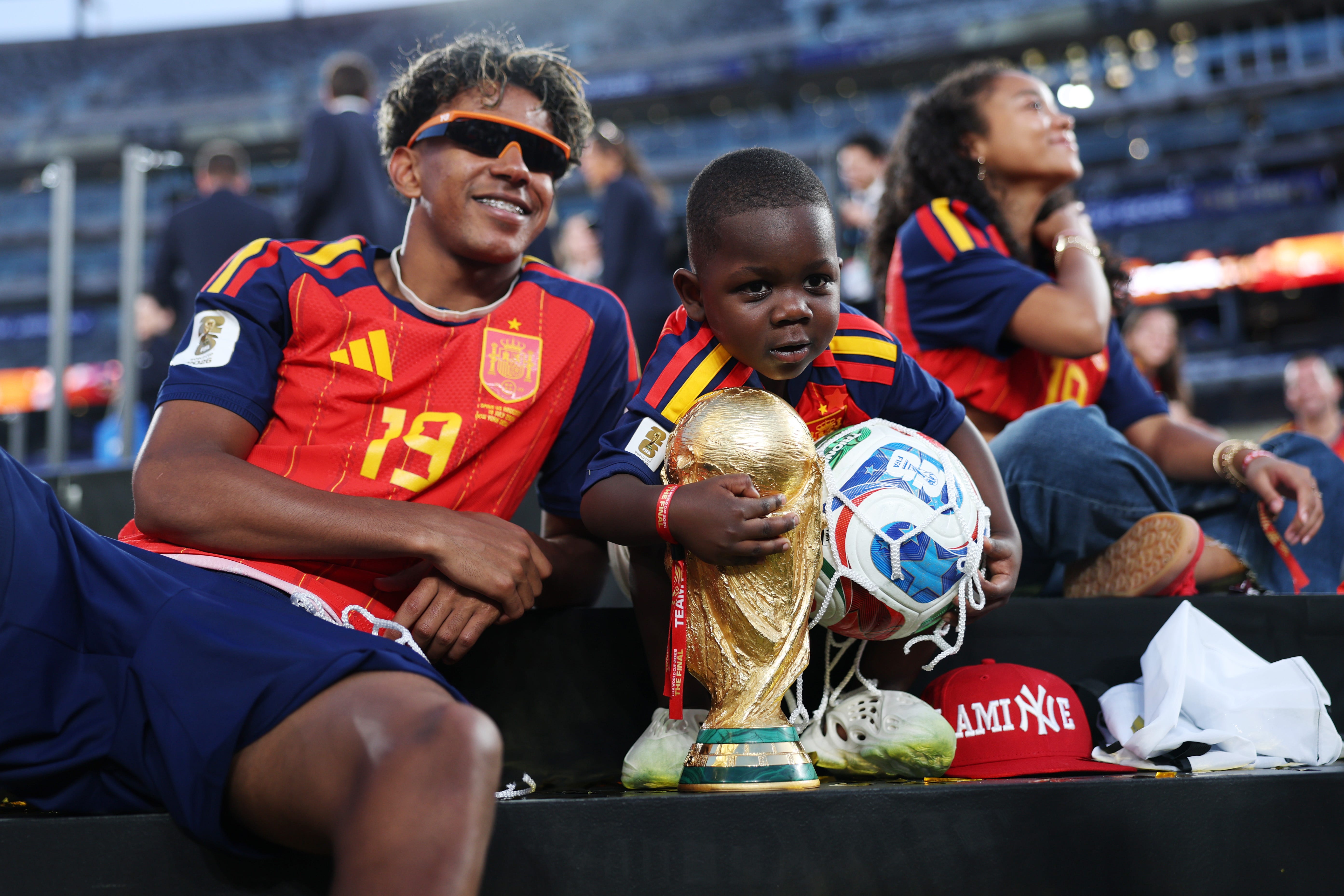
• The stars shined brightest. Just look at the Golden Boot race leaderboard: France’s Kylian Mbappé (10 goals, 4 assists); Argentina’s Lionel Messi (8 goals, 4 assists); England’s Jude Bellingham (7 goals, 1 assist); Norway’s Erling Haaland (7 goals); France’s Ousmane Dembélé (6 goals and 2 assists); and England’s Harry Kane (6 goals, 1 assist). That’s as glittery as it gets. France’s Michael Olise also dropped 7 assists, surpassing Brazilian legend Pelé’s 56-year-old record for most at a single World Cup. Yamal might have underwhelmed in the numbers department (1 goal), but if you watched any of Spain’s matches, his impact and gravity were still obvious; he’s now the first teenager to win both the Euros and World Cup.
• The underdogs barked loud. Cabo Verde captured the world’s imagination during its incredible run into the knockout stage. Neither Spain or Argentina could beat Cabo Verde in regulation! Sidny Lopes Cabral curled in one of the most iconic World Cup goals — and followed it with one of the most iconic celebrations — against Argentina.
• Titanic matchups, thrilling rallies, and stunning upsets. England holding off Mexico at Estadio Azteca. Paraguay’s penalty-kick upset of Germany. Cabo Verde taking Argentina to extra time. Netherlands-Morocco going to penalties. Norway upsetting Brazil. Belgium’s ridiculous rally against Senegal. Portugal’s tech-boosted win against Croatia. Argentina’s comebacks against Egypt and England. Even the almost-pointless third-place goalfest between France and England. Spain-Argentina might’ve lacked the haymaker swings we all would’ve wanted, but it still proved dramatic. Cinematic competition.
• A trio of breakout stars were impossible to miss. Côte d’Ivoire forward Yan Diamondé and Switzerland midfielder Johan Manzambi were outstanding. Spain center back Pau Cubarsí, named the competition’s Best Young Player, anchored a defense that surrendered one goal across eight matches and had the courage to make one of the most clutch clearances I’ve ever seen during the final minutes of Sunday’s final. While no player has reached a level of breakout stardom that Colombia’s James Rodriguez enjoyed on the 2014 World Cup stage, I think Diamondé (who looks set for a move to Paris Saint-Germain) and Manzambi (who completed his transfer to Aston Villa) are names to monitor entering the next cycle. Cubarsí is already a mainstay with Barcelona — it’s easy to forget he, like Yamal, is only 19.
There’s plenty to address about the tournament’s shortcomings, but the on-field product was special.
The World Cup should expand to 64 nations: PASS
Considering FIFA appears to be taking its cues from the United States in mixing insatiable greed with the soul of sport, hopefully it learns from the Americans’ mistake with the expansion of the College Football Playoff.
Don’t mess up a good thing you stumbled into. Do not expand — 48 teams is perfect.
The players are already playing too many games. Some are playing from 50 to 80 games in a calendar year. This has been something that coaches, players, and FIFPRO have warned about for years. The alarm was raised ahead of this World Cup, too, which marked the first to expand from 32 teams to 48. That problem only worsens by expanding the field and extending the tournament.
It’s a great problem for FIFA, which would see the World Cup balloon from 104 games to 128, meaning more TV revenue. According to BBC Sport, hydration breaks likely generated more than $250 million in ad revenue in the U.S. alone.
The grandiose number of teams also waters down the significance of reaching the tournament. This cycle, 206 countries competed for 48 spots, meaning less than a quarter of nations get in. Expansion would mean more than 30% of countries reach the World Cup — i.e., odds so favorable that even Italy could find a way to qualify.
Additionally, how many nations have the infrastructure to comfortably host 64 nations — and their fans — for, what would likely be, two months of games? Nearly 7 million fans attended the 2026 World Cup, setting a record. Are multi-host World Cups going to be the norm? (The U.S.-Canada-Mexico trio was the first multi-host since 2002 Korea-Japan; Morocco-Spain-Portugal have 2030.) The World Cup is already asking too much of the players physically, and it sounds ridiculous to increase the demands of travel during the summertime (in most of the world). Visa issues hampered teams and coaching staffs at the 2026 World Cup; perhaps it’s better in different countries, but that would be something to be mindful of.
The biggest beneficiaries from potential World Cup expansion are the pockets of stakeholders and TV executives. Not the fans. Every fan should be leery of how expansion could fundamentally corrupt alter the game beyond just three-minute “hydration breaks.”
The United States should host the 2038 World Cup: OPTION
Perhaps you are surprised this isn’t a PASS. The World Cup was amazing! It also sucked. We can hold multiple truths around here.
Ahead of the World Cup, a close friend of mine (American) confessed to our years-old soccer-obsessed2 group chat that he was struggling with finding joy in the World Cup happening on American soil because of No. 45 brazenly (lol!) doing whatever the hell he wants at the expense of livelihoods, here and elsewhere. I spoke with Iranian-Americans about how they were reckoning with Iran participating in a World Cup while the U.S. wages war against it. Thankfully, for everyone, the games served as a sedative, even if only a brief one, once they kicked off. But the issues didn’t stop there.
The aforementioned visa issues faced by players and traveling fans (!!!) entering the United States were extremely disheartening. Players and staff from Iran (who headquartered its team camp in Mexico instead of the U.S., where its games were played), South Africa, Senegal, Iraq, Haiti, Côte d’Ivoire, Algeria, Cabo Verde, and Tunisia each were affected by visa issues.
A Somali referee was barred from entering the U.S., despite having a valid visa because of links to “suspected members of terror organizations.” FIFA president Gianni Infantino’s response? “Maybe sometimes it’s good as well to chill, relax. We work on everything, we try to resolve everything.”
He didn’t resolve much. The fans of Iran and Haiti were subjected to severe travel bans. The U.S. suspended giving out visas to traveling fans from Senegal and Côte d’Ivoire. Rights groups and supporter organizations repeatedly cited visa difficulties for fans from Morocco, Egypt, Jordan, Iraq, Uzbekistan, Algeria, Tunisia, and Cabo Verde. (It took Cabo Verde goalkeeper Vozinha having one of the greatest performances ever to grant his mother a visa!)
Pull up a map and you’ll notice the pattern: Many of the countries affected are African, Middle Eastern, or from the Global South. The United States has a history of subjecting travelers from these nations to greater immigration scrutiny than those from Europe or the Americas.
“The claim that FIFA has made welcome to the world, unite the world to World Cup,” said Ronan Evain, executive director of Football Supporters Europe, last week, “has largely failed.”
Even for many people here in the U.S., the effort to unite through soccer wasn’t a possibility because of how overpriced tickets were. That didn’t stop people from going (including me) — if you’re a diehard soccer fan, you’re not going to skip a once-in-a-lifetime opportunity to see a World Cup match. FIFA suckered people like me into overpaying as it generated a record $15 billion in revenue (exact ticket and hospitality revenue isn’t known yet, but it’s forecasted to be around $3.5 billion) from the tournament. For reference, the 2022 Qatar World Cup generated a record $7.57 billion in revenue for FIFA, with ticket sales earning $949 million.
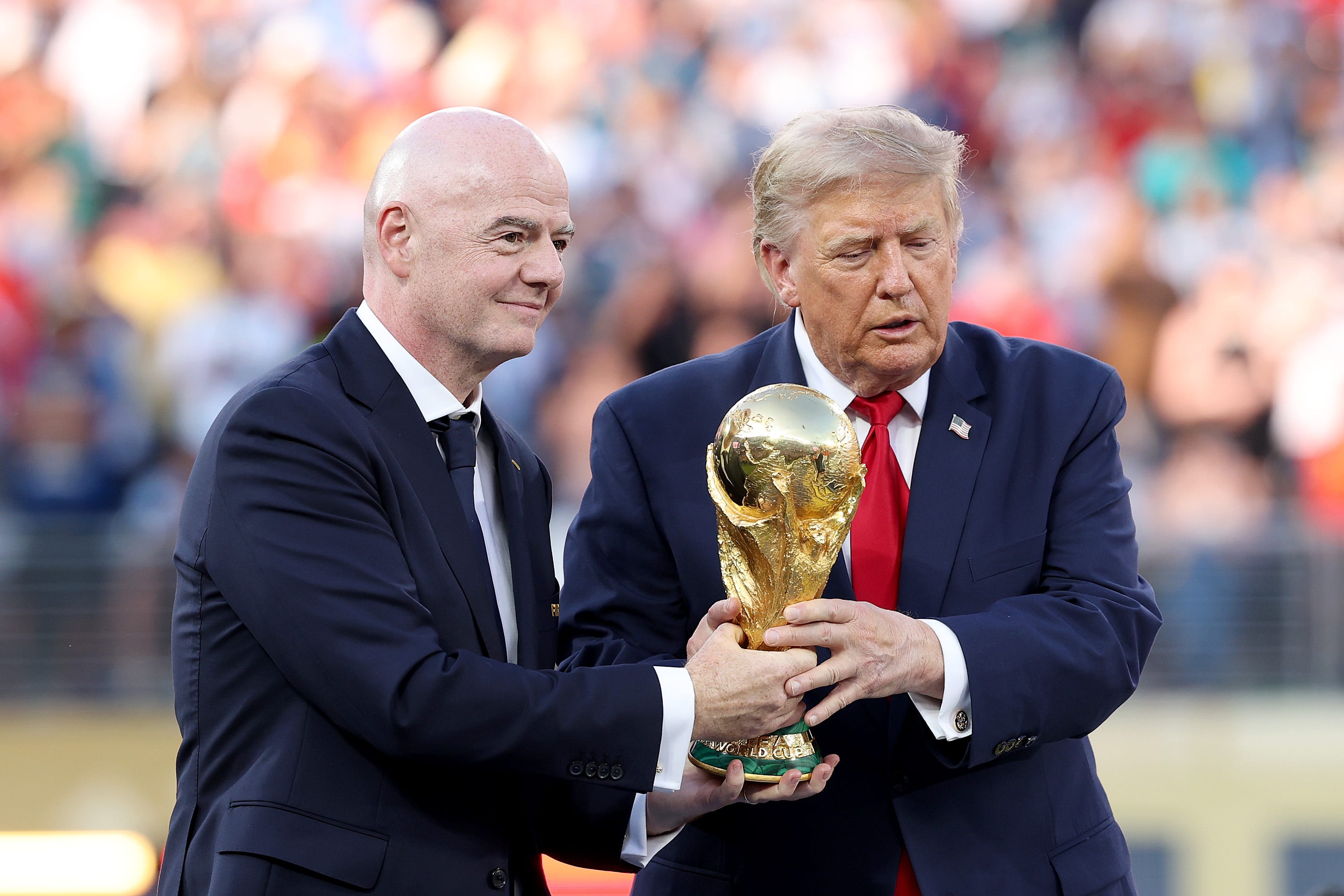
Last, but certainly not least, is the proximity of FIFA to U.S. powerbrokers who are, undoubtedly, the best in the world when it comes to greed. Greedy American billionaire influence on club soccer across the world is already rotting soccer’s soul at an ownership level. Allowing the American government to have such (obvious!) influence on the World Cup is concerning — did you see No. 45 refuse to get off stage to let the Spaniards enjoy lifting the trophy?
OK, let’s breathe.
Does all of that stuff suck? Yes.
Amid all of that, did we find reasons for why the U.S. had potential to be a great host? Also, yes3.
Samuel Hymes, a dual Fellow at Harvard University and the Economic Club of New York, has worked as a Washington, D.C.-based strategic advisor within the sports diplomacy space during the World Cup. (“Best way I can say it,” he says.) Basically, his job is to “just try to understand different values because we're welcoming people to a different place. Within sports diplomacy, many people are aware of the idea of it, but putting the two words together is really meaningful to people that they see it from a different perspective, a new understanding of what they're doing.” That meant plenty of 3 a.m. calls with people from different time zones and countries in pursuit of getting a full picture.
There were positives. Moments of viral cultural exchange — for visiting fans who managed to avoid U.S. security and/or visa holdups — proved endearing, especially the Scots’ takeover of Boston, the Norwegians’ Viking row, and a Japanese fan discovering Buc-ee’s and Texas Roadhouse. Yamal hit up a Georgia Wal-Mart and Haaland embraced his inner Texan.
“He absolutely fell in love with the culture,” Hymes notes. “Not only the people, but the whole area as well, too. … We learned from the World Cup that smaller markets — like smaller markets in Texas, smaller markets in Kansas City — can really still leave a lasting impact [on visitors from other countries].”
Hymes forwards this impression to what it could mean for the 2028 Summer Olympics, which are being hosted in Los Angeles. A handful of cities outside of Southern California — New York City, Columbus, Nashville, and St. Louis — will also host some events.
“Overall, it's going to bring more transformative growth into areas that are considered flyovers,” Hymes says. “I think it's mostly about awareness. Think about outside of England, where everyone knows the cities from the soccer clubs. But how many people can name all the towns in France? Or how many people can name all the towns in Italy?”
Here’s where the argument for the U.S. hosting the 2038 World Cup gets more realistic. The infrastructure piece already gives it an advantage — there’s even an argument the U.S. could shoulder a 48-team tournament on its own. Hosting the 2026 tournament and then having the 2028 Olympics provides plenty of experience. The issue that Hymes points out is whether the U.S. will have grown passion for soccer domestically enough by then to further stamp credibility.
“The only thing that it’s dependent on,” he says. “Is the media going to talk about it?”
Major League Soccer is not considered a top league. An Apple TV subscription is required to view games, aside from 34 aired on FOX networks, for a league that boasts the biggest name in the world in Messi, whose career is in its final chapter. Even with MLS slagging, though, soccer is clearly a much bigger draw now than the last time the U.S. hosted the tournament in 1994. FIFA claims that it filled its venues to 99.7% capacity at the 2026 World Cup, so there clearly interest exists. Plus, the USMNT’s run had the country watching at a record-setting pace, while (wrongly) yelling about Folarin Balogun’s red card and weirdly blaming Christian Pulisic for the Belgium loss.
So the potential, investment, and infrastructure are all there. As No. 45’s administration tries to swing its leverage against FIFA to win the rights to hosting the 2038 World Cup, there are obvious pros and cons.
“Before this World Cup, we were in the third longest drought in our country's history for not hosting a global sporting event,” Hymes says. “That is 24 years. The last one we had was 2002 in the Winter Olympics, and the ‘94 World Cup.”
If the current administration has its way, then the world will be back in 12 years. The United States has proven that it’s capable of hosting the biggest sporting event on Earth. The question is whether, by then, it will allow the world to experience the World Cup how it was always meant to be experienced.
Editor’s Notes
I do not own the rights to that video. It belongs to FOX. I will be nice to Alexi Lalas and never tweet mean things about him ever again, just do not come for my Substack. Apparently, the FOX broadcasts were amazing the rest of the tournament! I almost exclusively watched via Telemundo, so… congrats.
S/O to The Lads. “Soccer-obsessed” is just code for “I subject my friends to my inner stream of chaotic thoughts surrounding my favorite sport.”
To be clear, if you’re hung up on one or many of the previous issues mentioned, that’s a good thing. You have a conscience. I don’t make the rules, but my requirement for entry into World Cup performative fandom would require every person to reckon with those mentioned issues before being allowed to root for any team. And learn what a f*cking red card is!